



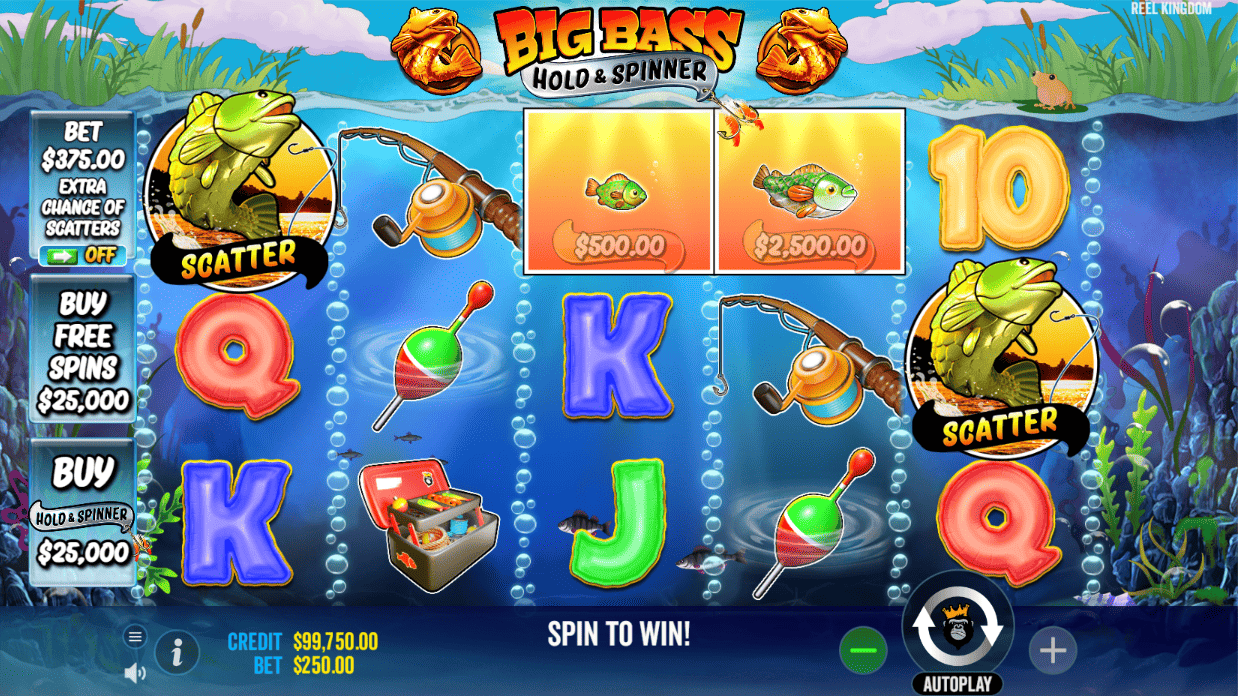
Within the online slot landscape, the fake reviews hold and win Games portfolio stands out not just for its captivating mechanics but for the multi-tiered security architecture that underpins every title. Players across Canada interact with these games through diverse platforms, and the reliability of each spin, bonus round, and payout hinges on systems that are seldom visible but entirely critical. Technical protocols, encryption standards, and player protection frameworks constitute the backbone of the category. The core promise centers on one principle: a Hold and Win bonus, with its coin-collecting tension, must execute with mathematical fairness and zero external interference. From the moment a session begins, multiple authentication layers check game files, random number generation outputs, and server-client communication integrity. This article analyzes how these measures function, what certifications bolster them, and how operators licensed for Canadian jurisdictions implement additional safeguards that surpass baseline requirements.
Encryption and Data Flow Reliability
Each communication between a player’s device and the Hold and Win game server travels through secure channels that prevent interception, tampering, or session replay. The baseline standard is Transport Layer Security (TLS) 1.3, utilizing AES-256 cipher suites to render captured data packets incomprehensible. This protective wrapper wraps authentication data, financial transactions, and game outcome data in a single encrypted stream. Aside from transport security, session identifiers renew at frequent intervals, making session takeover attempts practically impossible. The practical implication for Canadian users is clear: user balances, bonus spin activations, and Hold and Win feature triggers are kept tamper-proof during the playing session. Casino operators deploy certificate pinning on mobile apps, a essential phishing protection measure that prevents MITM attacks even when user devices connect through compromised public WiFi hotspots.
Identity Verification and AML Frameworks
Behind every funded account is a Know Your Customer (KYC) verification process that performs dual protective purposes: validating player identity to prevent underage participation and establishing beneficial ownership records that disrupt money laundering activities. Identity document verification uses optical character recognition combined with liveness detection selfie matching, defeating static photo deception and deepfake injection attacks. Proof of address obligations and source-of-funds disclosures escalate for higher deposit levels, following Financial Action Task Force directives followed by Canadian financial intelligence bodies. Transaction monitoring systems identify structuring patterns where players divide large deposits into smaller sums to evade reporting limits, with specific Hold and Win game activity scrutinized for chip-dumping or collusion markers during shared jackpot feature sessions.
Random Number Generator Accreditation and Inspection
The foundation of any Hold and Win slot is the random number generator that governs symbol positions, bonus coin values, and jackpot triggers. Certification documentation from independent testing laboratories such as iTech Labs, Gaming Laboratories International, and eCOGRA verifies these RNG implementations against stringent statistical standards. Each audit analyzes billions of simulated spins to confirm uniform distribution, unpredictability, and non-repeatability of outcome sequences. The RNG functions in isolation from game logic, implying that bet size, session duration, or account history have zero influence on result generation. For Canadian-facing platforms, provincial regulators require on-site RNG audits that verify seed generation and memory integrity at the hardware level. This dual validation framework guarantees that the respin locking mechanic central to the Hold and Win format delivers outcomes that are both mathematically random and externally verifiable.
Continuous Surveillance and Runtime Verification
Certification alone does not ensure ongoing integrity, so runtime verification systems integrated directly into game code become essential. Modern Hold and Win titles embed checksum verification routines that execute silently during every spin, comparing active code signatures against cryptographic hashes stored by the regulator. If a single byte differs from the certified version, the game engine terminates the session and reports the discrepancy to both operator and testing authority. This approach is particularly effective against memory corruption attacks and unauthorized server-side patches. Return-to-player (RTP) monitors run continuously, tracking actual payout percentages against theoretical models. If deviations surpass predetermined thresholds, automated system alerts initiate forensic analysis. For players, this results into a gaming environment where the 95-96% RTP values published for popular Hold and Win variants remain precise reflections of live performance rather than marketing claims.
Licensing Permitting and Conflict Resolution
The supervisory umbrella under which Hold and Win Games work for Canadian players establishes a defined accountability structure with concrete consequences for security breaches. Licenses from the Malta Gaming Authority, Kahnawake Gaming Commission, and provincial regulators such as the Alcohol and Gaming Commission of Ontario each place separate but overlapping security obligations. These licensing structures mandate separate player fund holdings, periodic third-party penetration assessments, and incident response protocols with established notification timelines. Dispute resolution channels provide players with unbiased judgment when security-related issues arise, such as alternative dispute resolution bodies that can require operator compliance. The multi-jurisdictional licensing approach avoids regulatory exploitation and preserves security standards irrespective of which body runs the Hold and Win site a player picks.
Safe Gaming Integration
The player safeguarding principles integrated into Hold and Win platforms goes beyond technical security into behavioral protections that avoid harm. Reality check alerts, deposit limits, and session loss thresholds integrate directly into the game interface without needing players to leave the Hold and Win bonus they are experiencing. Time-based pop-ups present net position and session duration at adjustable intervals, interrupting the immersive coin-collection mechanic just long enough to encourage conscious decision-making. Self-exclusion measures function across entire operator networks, meaning a single exclusion request blocks access to all Hold and Win titles and any future releases within that ecosystem. The cooling-off period feature is very well-designed, permitting short-term voluntary exclusion without the trouble of full self-exclusion, promoting proactive use before harmful patterns develop.
Deposit and Wagering Controls
Financial harm prevention begins with granular deposit controls that operators licensed for Canadian markets are obligated to offer. Players set up daily, weekly, and monthly deposit ceilings that cannot be increased without a mandatory cooling period, effectively stopping impulsive reload decisions during tilting episodes. Wagering limits on individual Hold and Win spins cap exposure per round, while loss limits stop sessions automatically when pre-set thresholds are reached. These controls synchronize across desktop and mobile sessions in real time, stopping circumvention through device switching. The implementation respects player autonomy while establishing structured friction against loss-chasing behavior, a design philosophy that preserves the entertainment value of the Hold and Win mechanic without punitive limitation.
Oznamování bezpečnostních chyb and Správa záplat
Žádná bezpečnostní architektura není neměnná, so Hold and Win operátoři zachovávají defensive currency through programů pro oznamování zranitelností and strukturovaných cyklů záplat. Programy pro hledače chyb nabízejí financial incentives for etické bezpečnostní výzkumníky to nalézt and důvěrně oznámit nedostatky in programové vybavení herního klienta, infrastrukturu na pozadí, or integrace plateb. Opravy kritických bezpečnostních chyb deploy pomocí procesů havarijního řízení změn that bypass standardní cykly vydávání, while pravidelné aktualizace zabezpečení integrate with naplánované intervaly údržby her communicated to hráčům dopředu. Schválené herní soubory podstupují nové schválení after jakékoli záplaty that modifies outcome-determining code, garantující that opravy zabezpečení never inadvertently alter RTP or bonus trigger mathematics. This cyklus neustálého zlepšování způsobuje that the Hold and Win titul a hráčka launches dnes zahrnuje ochrany against attack vectors that pravděpodobně neexistovaly when the game first earned schválení od regulátora.
Payment Security and Withdrawal Protection
The monetary exchange system surrounding Hold and Win gameplay necessitates security measures that safeguard both deposit flows and payout disbursements. PCI DSS Level 1 compliance acts as the baseline for payment processing infrastructure, with tokenized card tracxn.com storage eliminating raw cardholder data from operator databases. Withdrawal requests activate mandatory multi-factor re-verification and manual review for high-value payouts, forming a security interval between a potential account compromise and irreversible fund extraction. Payment method confirmation verifies withdrawals revert to originating deposit sources where possible, interrupting layering attempts within money laundering sequences. For Canadian players using Interac, cryptocurrency, or e-wallet rails, additional velocity checks flag rapid withdrawal attempts immediately following large Hold and Win jackpot wins, safeguarding both operator and legitimate winner from social engineering fraud.
System Honesty and Anti-Cheat Mechanisms
Within the Hold and Win game client itself, multiple integrity layers block client-side manipulation that could artificially trigger bonus rounds or inflate coin values. Code obfuscation, debug detection, and memory integrity checks defeat modified APK installations and emulator-based cheating attempts. Server-side outcome determination guarantees the client device acts solely as a display terminal, with all Hold and Win respin sequences, jackpot assignments, and coin value multipliers processed on protected backend infrastructure. Timestamp validation prevents replay attacks where a captured winning spin attempt is resent, while nonce-based request signing guarantees each game round connects with a unique, unrepeatable identifier. For competitive integrity during networked progressive jackpots found in certain Hold and Win variants, synchronized server clocks avoid time-window exploitation across multiple accounts.
Account-Wide Account Security
Ahead of a single Hold and Win symbol appears on the reels, the player account must resist a constant barrage of credential-stuffing attempts, phishing campaigns, and social engineering attacks. Trustworthy operators serving Canadian markets require multi-factor authentication as a default, commonly combining biometric verification on mobile devices with time-based one-time password generation. Login anomaly detection systems detect impossible travel scenarios and device fingerprint mismatches, instantly freezing accounts pending identity re-verification. Password policies mandate minimum entropy levels that resist dictionary attacks, while bcrypt or Argon2 hashing algorithms with per-user salts protect stored credentials against database breaches. These measures envelop the Hold and Win gaming experience with a perimeter defense that functions regardless of which specific title a player picks.
Educational Resources for Players and Openness Materials
Protective technical measures attain their full protective potential solely when players comprehend how to leverage them. Hold and Win platforms include educational resources: interactive tutorials on setting up multifactor authentication, detecting phishing attempts that spoof customer support communications, and verifying licensing credentials before depositing. Game rule transparency documents provide thorough statistical breakdowns for Hold and Win bonus triggers, coin value distributions, and jackpot contribution rates, enabling mathematically literate players to validate that actual outcomes align with stated odds. Session history exports deliver detailed information that players can examine independently or send to third-party auditing tools. This transparency layer converts security from a purely technical concern into a joint obligation where informed players become involved partners in their own protection.
- TLS 1.3 scrambling with AES-256 encryption standards secures all data while being transferred between player devices and game servers
- Independent RNG validation from iTech Labs, GLI, and eCOGRA verifies mathematical unpredictability through billions of simulated rounds
- Runtime checksum checking detects any unauthorized code modification, triggering immediate session shutdown and regulatory warnings
- Multi-factor verification with biometric confirmation protects player accounts against credential stealing and unauthorized access
- Deposit, loss, and session time limiters integrate directly into the Hold and Win screen for immediate behavioral intervention
- KYC procedures combine document authentication with liveness screening to prevent underage play and identity deception
- Server-side outcome generation and nonce-based request authentication prevent client-side manipulation and replay attacks
- PCI DSS Level 1 payment management with tokenized card storage secures financial data throughout the transaction process
- Multi-jurisdictional licensing generates overlapping security demands and independent dispute resolution routes
Hold and Win Games function within an ecosystem where security embodies a continuous investment rather than a one-time implementation. The measures safeguarding player funds, personal data, and game outcomes span encryption protocols, behavioral controls, identity verification, and ongoing certification audits. Each layer addresses specific threat vectors while contributing to a defense-in-depth architecture where the failure of any single control does not expose players to material harm. The Hold and Win mechanic itself, with its suspenseful coin-locking sequences and jackpot potential, provides entertainment value precisely because players can trust that every respin unfolds according to certified probability distributions. For Canadian players navigating this space, the combination of international certification standards and domestic regulatory oversight ensures a security posture that is strong, transparent, and continuously improving through structured vulnerability management and player education initiatives.